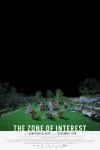
We follow the life of Rudolf Höss the commandant of Auschwitz and his wife Hedwig living in a house next to the wall of the camp, bringing up their five children and living what looks like a happy life.
⭐️⭐️⭐️⭐️
The Zone of Interest was the term used to describe the area around the Auschwitz camp, and that was something that I did not know until before heading to the cinema to see this film, I was curious to why it had that title. Although knowing that will not prepare you for what you are about to witness.
The Holocaust is one of the worst things that has ever happened and we have seen many films made around it for a long time, never wanting to forget the memories of those taken in such a brutal manner. Heading to see a film around this is always extremely difficult and this was no different, I wasn’t really sure what to expect.
We get a haunting look into the life of Rudolf and Hedwig, with their children living a perfectly lovely family life. Enjoying time in the river, and the impressive garden that they had put together, celebrating birthdays and having friends and family visit. The reason that’s haunting? Well, just over the wall from this was Auschwitz camp and while we never actually see anything happen inside we hear screams, we see the smoke from the chimney and the fires burning.
That for me made it even worse, how evil do you have to be to bring your children up next to that and think it is all totally acceptable? It gave me intense feelings of utter sadness and hatred towards the pair. I couldn’t actually decide whether I thought Hedwig or Rudolf was the worst in it all. Although when given a transfer Hedwig decides to stay in her dream home, so maybe that makes her worse? I still cannot decide in all honesty.
The saving grace was when Hedwig’s mother arrives she actually shows compassion and struggles with the sight of the camp, knowing what is happening inside and cannot bare to actually stay in the house and leaves without even telling her daughter. I actually found that to be one of the best moments within the whole film, as that did at least show not everyone was so blinded by what was going on. The fact she mentioned someone she worked for and a friend possibly being in the camp on arrival was tragic.
Showing the innocence of the children playing as well, knowing that Jewish children were tortured behind the wall so close to them is another devastating thought the film gives you, which is very impressive filmmaking and storytelling considering we don’t see the brutal reality of what was happening but we knew, the screams, the cries, the gunshots and shouting.
It is quite a difficult film to watch in terms of the way it is shot around the house and garden due to director Jonathan Glazer using five fixed cameras with no visible crew to capture as many scenes as possible and this meant the actors didn’t know if they were in a close-up or wide shot, creating a realistic enviornment. The performances were impressive from Sandra Hüller and Christian Friedel, in quite frankly horrendous roles.
 Let's Go To The Movies